
Korea Sensitive to Obesity
Many people consider a slightly lean underweight, who looks slim rather than overweight, healthy. However, a series of studies have shown that a slightly chubby overweight is beneficial to health since 2010. When you get sick, you recover more easily than a skinny person. This is the result of rethinking the correlation between weight and health.
Rather than being too obsessed with losing weight, even if you've gained a little weight, especially if you're relatively high in age, you'd better not try too hard to be thin. Even if you are slightly out of the standard weight range, you should not take it too seriously and live without stress while exercising properly and controlling your diet.
In the medical community, body mass index is mainly used to determine whether weight is standard, underweight, or overweight. The body mass index, commonly referred to as the Body Mass Index (BMI), refers to the number of kilograms divided by the square of height (m). The Korean Society of Obesity classifies those below 18.5 as underweight, 18.5 to 22.9 standard weight, 23 to 24.9 as overweight, 25 to 29.9 as mild obesity, 30 to 39.9 as moderate obesity, and 40 or over. Other countries in Asia see over 25 as overweight and over 30 as obese. It can be seen that Asian countries are relatively tolerant of obesity and overweight than Korea.
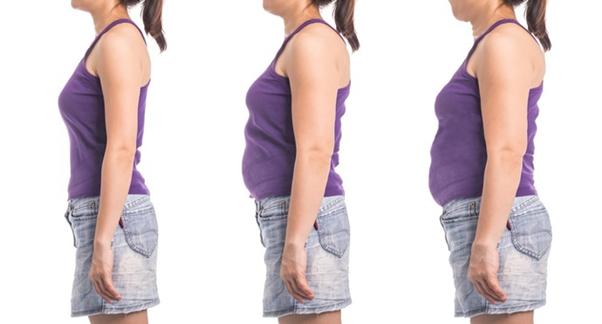
Fat? Chubby?
What's your healthy body type?
#21 Since 2010, a series of studies have been published dealing with the correlation between obesity and disease or health. Among these studies, overweight people live longer than underweight people when they have heart failure, diabetes, or dementia. Even when cerebral infarction occurs, overweight people have relatively mild symptoms because they secrete more hormones that help blood vessels.
Some scholars point out that thin people are often sensitive to stress. Everyone knows that stress is disadvantageous to maintaining health or disease resistance. Medical experts say that it is good for health to be slightly fat, especially for the elderly who are prone to various diseases. Based on the results of these studies, some media outlets deal with somewhat exaggerated and distorted titles such as "obesity is not the enemy of health, but rather makes people live longer," "fat people live longer," and "fat people are healthy." But what we need to make a clear distinction here is the fact that obesity and overweight are distinctly different.
Fat and chubby have a significant difference in nuance. Fat is close to obesity and chubby is close to overweight. Obesity, in particular, high and moderate obesity are major factors that cause various metabolic diseases and cancer. In addition, even if you are overweight, if you have poor muscles in your arms or legs and severe abdominal obesity, a red light can be turned on for your health.
What is the
BMI number with the lowest probability of death?
Once upon a time, there was definitely a preference for fat people in the age of chronic food shortages when tigers were smoking. This is well seen in the tows and sculptures left by ancestors of that era. Regarding this fat woman, Toe, etc., we analyze that fat people prefer fat people because fat people endure longer than skinny people in famine situations.
The recent series of studies showing that overweight people may rather be more advantageous in disease situations is clearly in line with our ancestors' preference for fat people in the past. In particular, a team led by Yoo Geun-young, a professor of preventive medicine at Seoul National University Medical School, conducted a nine-year survey of 1.14 million Asians, including 20,000 Koreans, and found that Koreans, China, and Japan were the least likely to die when the BMI was 22.6-27.5. This also includes the BMI index, which is equivalent to mild obesity, according to the standard weight classification standard of the Korean Society for Obesity.
The
research team criticizes Asians, especially Korea, for defining obesity too strictly as the problem of obesity is linked to commercial benefits (diet medicine or diet medicine). It is pointed out that the standards for overweight, obesity, and standard weight should be renewed, in other words, more relaxed.
In a word, the recent trend of obesity-related medical research is that you don't have to worry much about your health if you're not too skinny and too fat, especially if you don't have severe abdominal visceral obesity. It's really good news for people who are stressed out or obsessive about exercising when they pay full attention to slimming and just looking at food.
Writing Ahn Jong-joo (former Hankyoreh health and welfare reporter, Lyna Foundation Press Talent Sharing Group) Photo Shutterstock