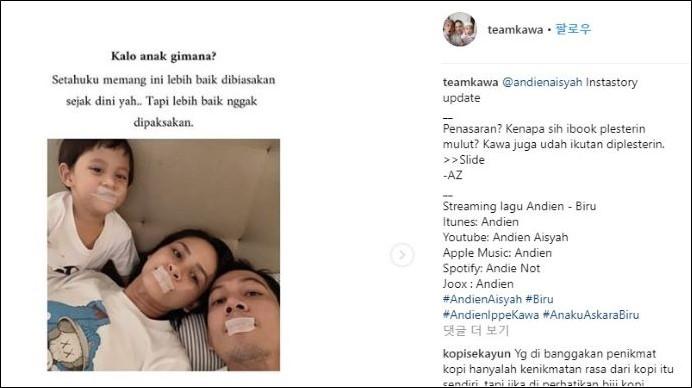
Not long ago, Indonesian singer Indien posted a photo of her son, husband and her mouth with tape on her Instagram, sparking controversy. The point of controversy is that she slept with tape on her mouth, and she said she was able to sleep well after sleeping with tape on her mouth, that she felt light when she woke up in the morning and that her cough and bad breath improved, explaining that she slept with tape to practice "Buteyko breathing."
Buteiko Breathing Method for Diagnosing Breathing
The
Bouteiko breathing technique is one of the nasal breathing techniques for breathing through the nose, a breathing technique created by Professor Buteiko from Ukraine for asthma patients at a medical school in the former Soviet Union. He points out that the habit of breathing fast and hard causes asthma, especially when breathing with the mouth.
The
nose has a filtering function that warms and moisturizes the air, and when breathing through the mouth, cold air enters the lungs directly and stimulates the bronchial tubes, causing contraction, worsening asthma. That is, changing the habit of mouth breathing, fast breathing, and breathing with all your might relieves asthma symptoms.
is also effective for high blood pressure, sleep apnea, and anxiety symptoms. In fact, many experts say that fast, short, and frequent hyperventilation can cause many diseases. Over-breathing causes oxygen and carbon dioxide to not be properly exchanged and eventually reduces carbon dioxide in the body, which adversely affects blood vessels, muscles, and metabolism.
So how can I find out if I'm having trouble breathing? You can test it with the Buteiko breathing method, which focuses on breathing slowly, rather than just breathing through your nose.
How to
의자 Sit comfortably in a chair and keep your breath comfortable and constant.
호흡 If your breathing is stable, exhale, and when you inhale again, breathe in half, hold your nose, and hold your breath. At this time, measure how long you can stand it.
더 When I can't hold my breath anymore, I exhale through my nose. The important thing is to spit it out slowly. It also records the time to breathe out slowly.
If the sum of the times recorded in
If
breathing training is found to be necessary, the training method is not much different from the diagnostic method. When breathing is stable, breathe in through your nose for about 1 to 2 seconds and hold your breath. When you are out of breath, breathe out slowly through your nose as if you are holding moxibustion. Holding your breath is about 10 to 15 seconds, so it’s enough not to be painful, and depending on the person, it’s okay to stop for about 5 seconds.
Repeatedly doing this process can lead to slow breathing habits. The effect of pausing breathing reduces the amount of breathing and the number of breaths per minute, suppressing hyperventilation and increasing carbon dioxide concentration, relaxing the bronchial tubes and moving the diaphragm.
Can I tape my
mouth?
Dr.
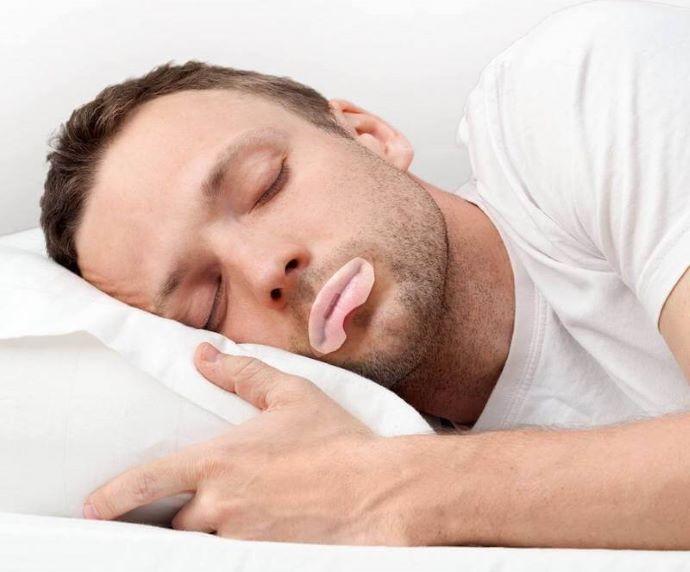
Bouteiko reportedly let him sleep with tape on his mouth as a way to train slow breathing through his nose. In fact, there are many testimonies abroad that their health has improved since they started sleeping with tape on their mouths, and according to a book written by a Hong Kong spine specialist, buteco breathing has been found to be effective in asthma patients in clinical trials conducted in Australia and New Zealand.
But there are also many doctors who have doubts about sleeping with tape on. Dr. Kathleen Yaremchuk, an otolaryngologist in Detroit interviewed by BBC News, said, "If you're sick or have to vomit, you shouldn't put tape on your mouth," adding, "I can't recommend it to everyone."
#46 Also, Professor Pat Bath of the Louisiana State University Health Science Center said buteiko breathing is one of the "non-medical forms of therapy" that can improve asthma and other respiratory diseases. In addition to, Verywell Health, an American medical health website written by doctors and nurses, also states that Buteiko breathing should not be considered a medically prescribed treatment alternative.
The best way to breathe is diaphragm breathing
Bouteiko breathing cannot be asserted as a cure, but it has been proven to be effective in improving health. However, when training nasal breathing, taping therapy may vary from person to person, so caution is needed.
When practicing breathing with thenose, the best thing to do is slow breathing with the diaphragm. Many people confuse abdominal breathing and diaphragm breathing, which can be seen as abdominal breathing if only the upper abdomen bulges when breathing, and if the chest stays still and the entire rib and abdomen bulges, it can be seen as diaphragm breathing.
diaphragm breathing helps correct the spine by training the abdominal muscles and even relieves back pain and cervical pain. In addition, as the diaphragm goes down, it exerts force on the pelvic muscles, which improves urinary incontinence. This is why diaphragm breathing is needed as you get older. However, if you are suffering from lung disease, you should learn how to breathe properly after consulting with your doctor.
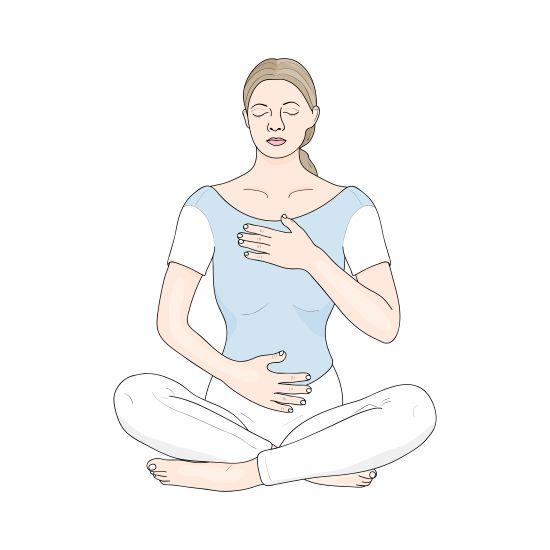
diaphragm breathing
1. While lying down or sitting comfortably, place one hand on top of the chest and the other on the stomach.
2. Breathe in slowly through your nose so you can't hear your chest.
3. Leave your chest as it is and exhale through your mouth, slowly contracting your stomach as if the wind were escaping from a balloon.
Planning Seohira Picture Shutterstock Reference Book <I only breathed well>(Booklife, Honmaikuo) <Breathing Revolution>(Sunday, Mshuye)