
There’s an interesting scene in the
time-trading movie <Intime>. When the main character who lived in a poor neighborhood moves over to a rich neighborhood one day, the rich immediately recognize that the main character came from a poor neighborhood. How did they know? The answer was ‘walking speed’. People in poor neighborhoods, where every minute and second is important, were quick to walk.
Here's more behind the scenes. Thirty years later, when they reached middle age, they compared the aging speed of the two neighborhoods and found that the aging speed of the rich neighborhood was faster. People in rich neighborhoods who live more leisurely lives age faster? In fact, this backstory is not a story in the movie, but in overseas research data.
The slower the pace of walking, the faster the rate of aging, according to a study published by joint researchers at King's College London (KCL) and Duke University in the United States. The researchers conducted physical examinations, brain function tests, and brain scan tests every two years from their 40s on 1,000 people born between 1972 and 1973.
And at the age of 45, people with slow walking showed signs of aging faster in their lungs, teeth, and immune systems than in fast people. Even the degree of degeneration of brain function was worse in people with slow walking speed.

Walking is well known for your health. However, few people even care about the speed of walking. In the medical field, walking speed is used as a useful indicator of health status. This is because walking speed reflects cardiopulmonary function, spinal health, muscle strength, sense of balance, and vision. This pace of walking has become more important as it has been reborn as an indicator that even determines the rate of aging.
This is not limited to foreign countries. There are similar findings in Korea. Researchers at Asan Medical Center in Seoul observed the health conditions of 1,348 people aged 65 or older living in Pyeongchang-gun, and found that the death rate of the elderly who walked slower than normal was 2.54 times higher and the hospitalization rate of nursing hospitals was 1.59 times higher. Slow walking speed was a red light for health.
What is more surprising in this study is that the pace of walking among the elderly in Korea is slower than that of the elderly in foreign countries. When foreign seniors moved about 48m per minute, male seniors in Korea moved 40m and female seniors moved 32m. There was as much as a third difference in speed.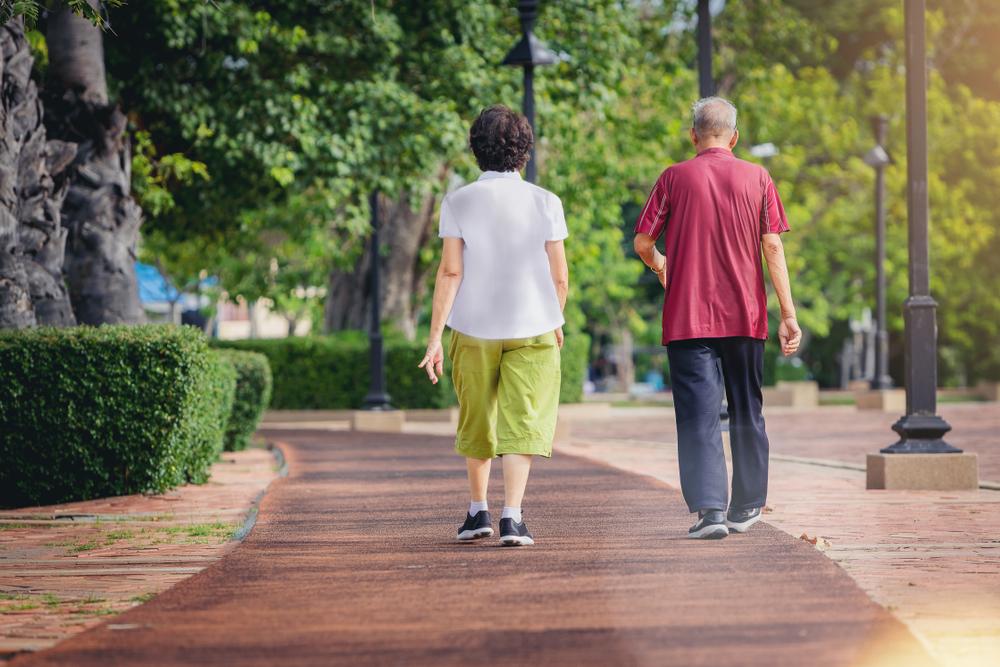
Two facts have been confirmed so far. One is that the slower the walking speed, the faster the aging speed, and the other is that the walking speed of the elderly in Korea is relatively slow. Therefore, as you get older, walking steadily and maintaining your walking speed a little faster is a way to stay healthy.
But if you go outside right away and walk fast, it will strain your body. Walking also requires practice and training. The Korea Working Association provides walking programs for people who want to improve their health through walking. Walking anywhere you want, such as a shopping center, a park near your neighborhood, or outside, with the goal of walking for a certain amount of time every day, is the start of walking practice.
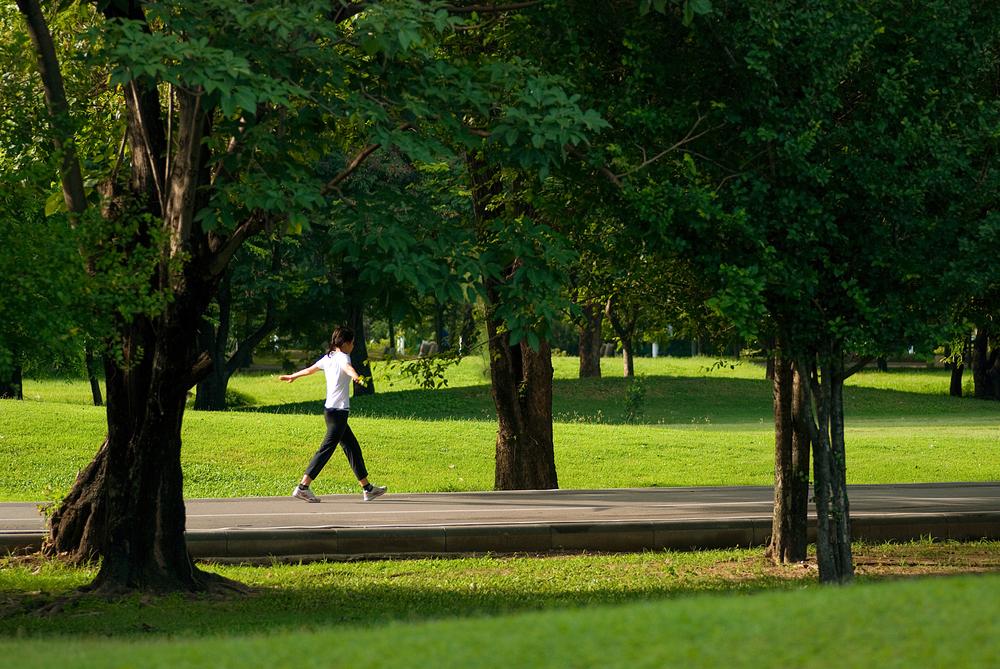
Walking Beginner 3-month Plan
(Source: Korea Working Association provided)
The advantage of
walking is that it can be practiced without any tools. However, I need a simple tool to check how far I walked and how fast I was. A smartphone app is enough. You can practice more effective walking through pedometer apps (Pacer, Cashwalk, pedometer, etc.).
1 week
It's important not to overdo the first start. First of all, I walk freely around the street near my house for 20 minutes. Speed walks at normal speed. Repeat this for about 3 days, then increase the walking time to 30 minutes. By this time, the walking course is drawn in your head to some extent.
If possible, you'd better choose a ground that's not uncomfortable to walk in any weather. If you have decided on a course, walk at normal speed and time it. Now, we aim to reduce the time little by little based on this time.
2nd week
Walk fast at least twice along a fixed route. At this time, the fast speed is about 60-70% of the heart rate, and you can talk naturally while walking. It aims to measure the time to see if you can maintain a fast speed for a few minutes, and increase the time little by little.
3~5 weeks
I walk at high speed twice a week, but the standard of high speed is that my heart is pounding and I'm out of breath to some extent at such a speed that it's hard to sing. Walk for 20 minutes at this speed, and practice until the fifth week to walk for up to an hour.
6~11 weeks
Try various routes. It uses various roads such as uphill and downhill roads. Instead, it maintains walking speed. All routes must be timed and checked for improved time the next time you call. Practice walking every day, but walk at a breathtaking speed for about 20 minutes a day.
12 weeks and up
Now walking is an integral part of everyday life. It is now necessary to aim to pass a set distance within the speed limit. It aims to pass the 1.6km distance in 18 minutes. If this is still difficult, repeat the 6th to 11th weeks more. If the goal has become easier, it increases the intensity by increasing the walking time and distance.