
Medicine May Slow Down Dementia
Once dementia progresses, it cannot return to its previous state, but still, taking a drug called a dementia treatment can slow down the situation in which dementia symptoms become serious as much as possible. There are two main types of dementia treatments. One is a drug that slows down cognitive decline, a key symptom of dementia (mainly Alzheimer's dementia), and the other is a drug that controls behavioral psychological symptoms (BPSD) of dementia.
In fact, neither drug can completely cure dementia, so technically it cannot be called a "treatment." It only slows the deepening of symptoms. First, to look at drugs that slow down cognitive decline, you need to know how cognitive decline appears in the brain. The human brain is made up of nerve cells called synapses. There is a neurotransmitter between nerve cells and nerve cells, and the brain of Alzheimer's dementia patients lacks a neurotransmitter called "acetylcholine (Ach)."
This is because “acetylcholine decomposition enzyme” that decomposes
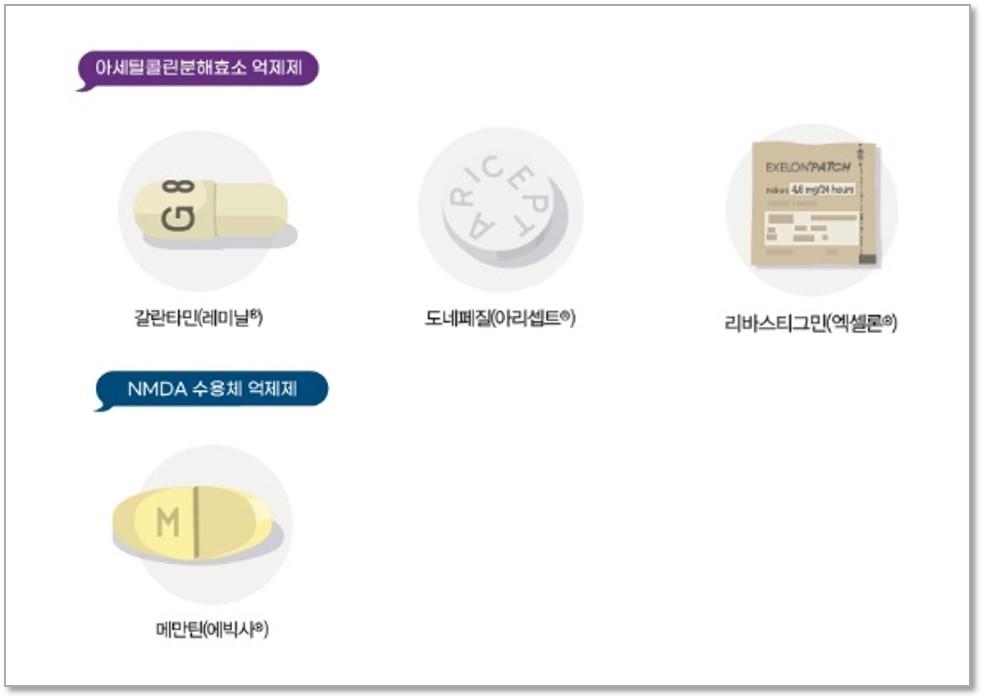
acetylcholine is secreted, and the drug that inhibits this is “acetylcholine decomposition enzyme inhibitor.” Taking this drug prevents acetylcholine from breaking down and helps acetylcholine to be transmitted well between nerve cells, slowing down cognitive decline. In addition, NMDA receptor inhibitors, a drug that inhibits excessive activation of NMDA receptors in nerve cells, have also been developed as drugs that slow cognitive decline.
When you're becoming a different person, you're prescribing antipsychotics
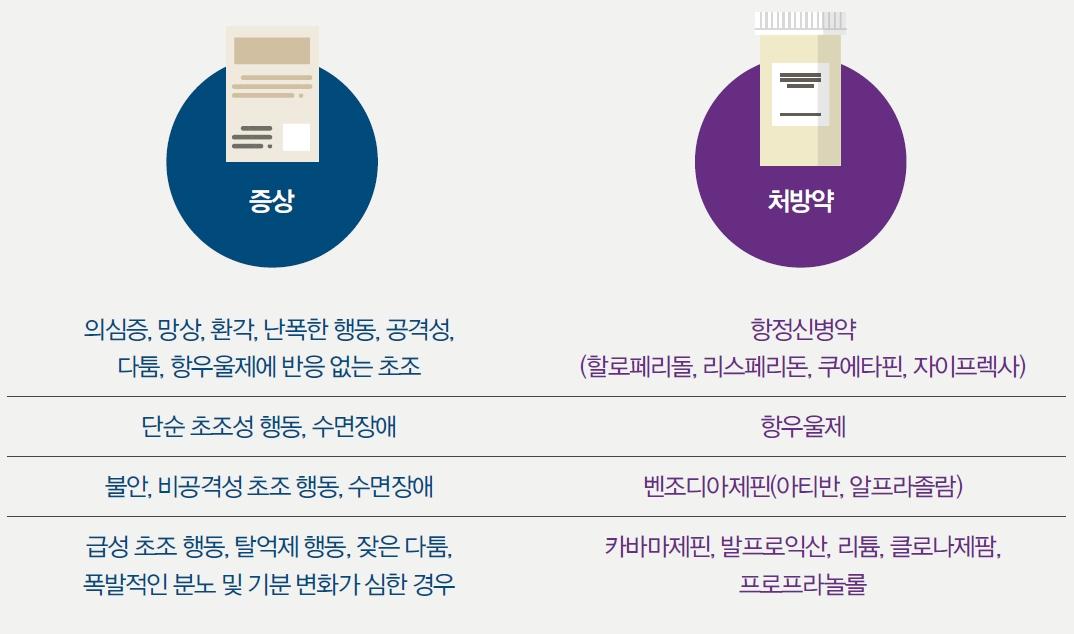
There are also dementia patients who simply degrade cognitive function, but many dementia patients are accompanied by "behavioral psychological symptoms (BPSD)," such as frequent anger or sudden increase in suspicion and jealousy. In principle, behavioral psychological symptoms should be treated without using drugs as much as possible. However, in situations where it is difficult to control with non-drug treatment, and it is a problem for the patient himself or others, he or she is forced to prescribe and take drugs.
People who take the drug for the first time have a lot of difficulties because
dementia treatments have a variety of side effects regardless of type. Acetylcholinease inhibitors often have digestive side effects such as nausea, vomiting, dizziness, and indigestion. NMDA receptor inhibitors can have side effects such as insomnia, dizziness, headache, hallucinations, and diarrhea.
In addition, taking antipsychotics can be accompanied by symptoms of Parkinson's, which can lead to poor behavior, swallowing disorders, hand tremors, or slow walking. One more concern is whether it is okay to eat any food while taking dementia drugs. There is no food that should be banned in particular, but while taking antipsychotics to treat behavioral psychological symptoms, swallowing disorders may occur, so it is recommended to refrain from eating lumps that are prone to choking.
The
medication is valuable in helping patients get to know their families for a longer period of time and lead a basic daily life, even if they cannot cure dementia. Therefore, it is recommended to continuously take acetylcholinease inhibitors or NMDA receptor inhibitors that help improve the cognitive function of dementia from the beginning of dementia.
Drugs and effects vary depending on the severity of dementia
dementia is defined as a decrease in cognitive function and the resulting decrease in daily life function. Evaluating the dementia stage includes the Mini-Mental State Exam (MMSE) test (out of 30 points) that tests cognitive function, and the Clinical Dementia Rating (CDR) and Global Deterioration Scale (GDS) tests that evaluate other overall dementia symptom stages. These MMSE, CDR, and GDS scores are combined to determine the severity of dementia, and the lower the MMSE score, the higher the CDR and GDS score, the more severe dementia is considered.
Drugs that slow cognitive decline, a typical symptom of
dementia, are relatively expensive and can generally be prescribed only when they meet insurance standards. Depending on the severity, the types of drugs covered by insurance also vary. Donepezil, developed the longest time ago and proven to be effective in various stages of dementia, is the widest drug with insurance coverage of 0 to 26 points based on MMSE, 1 to 3 points of CDR and 3 to 7 steps of GDS. On the other hand, the relatively recently developed “Galantamine” is insured only for mild dementia with MMSE score of 10 or more, and “Memantine” is insured for MMSE score of 0 to 26, but has been proven to be effective only for severe dementia with score of 20 or less.
Insurance coverage may vary slightly depending on the type of dementia. For now, in Alzheimer's dementia, insurance is applied to most drugs. Insurance is applied to Donepezil for some vascular dementia and ribastigmine for dementia caused by Parkinson's disease. In particular, ribastigmine is marketed in the form of a patch attached to the skin, so dementia patients who do not take medicine well are highly preferred. Recently, as it is considered important to take cognitive function improvement drugs in relatively early Alzheimer's dementia, it is recommended to take cognitive function improvement drugs early if they meet insurance standards. However, in the case of severe dementia with a lot of advanced dementia, there is not much room for improvement even if you take medicine.