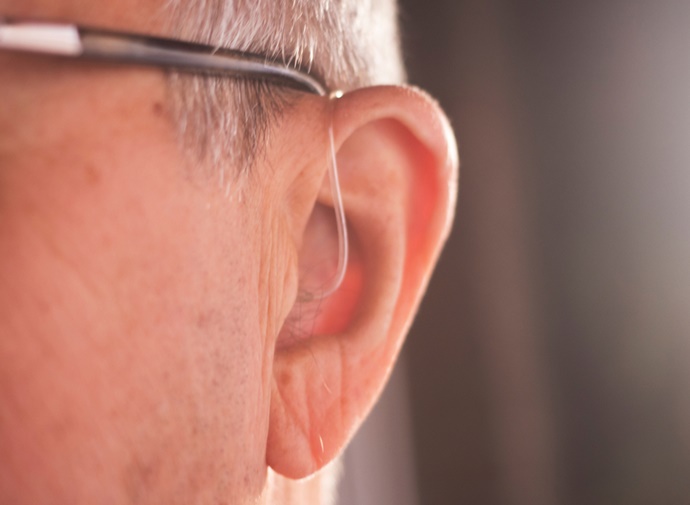
A, who visited his hometown after a long time, was surprised by the clear diagonal wrinkles caught by his mother's earlobes. This is because I recently heard from a TV program that people with wrinkles on their earlobe are twice as likely to have dementia as those who do not.
Will having wrinkles on my earlobe really increase my risk of dementia?
YES.
2 years ago, a paper jointly published by Kyung Hee University and Sungkyunkwan University Medical School titled "The Relationship between Diagonal Ear Bulk Wrinkle and Cognitive Functional Disorder" became a hot topic. Diagonal earlobes wrinkles were observed more frequently in patients with mild cognitive impairment and dementia than in normal people. It was also said that this was closely correlated with vascular dementia and Alzheimer's dementia. Studies have shown that people with wrinkles on their earlobe had twice the risk of dementia and 7.3 times higher brain regression than those who did not.
Then why do wrinkles appear on the earlobe?
This is related to blood flow. Fat and microvessels are distributed in the earlobe, and when blood flow to the brain decreases, the ear naturally lacks nutritional supply, resulting in wrinkles. In the actual study, microvascular vessels were blocked around the earlobe wrinkle, and when MRI was performed on the patient's brain, small blood vessels in the brain were also blocked.
In other words, the earlobe is an indicator of brain blood flow, and if blood flow does not flow smoothly to the brain, the probability of vascular dementia, Alzheimer's dementia, and stroke increases, so it is better to pay attention to the condition of the earlobe. <The American Journal of Internal Medicine (AJM)> also published a study showing that 78.8% of 241 patients hospitalized for acute stroke had earlobe wrinkles.
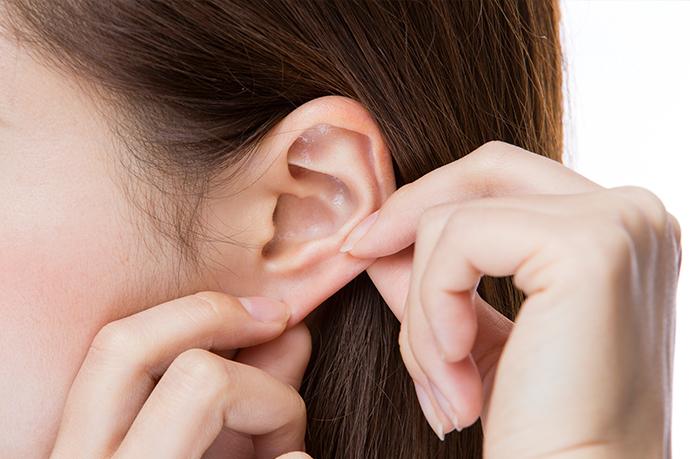
You can suspect not only dementia but also heart disease?
earlobe wrinkles are sometimes cited as a precursor to heart diseases such as angina and myocardial infarction. This is because the heart acts as a "pump" that sends blood all over the body. It is easy to understand a series of processes that cause problems with the function of the pump or weak intensity, resulting in a lack of blood flow to the brain, which appears as earlobe wrinkles.
The correlation between
heart health and earlobes wrinkles is revealed by a 1973 study by respiratory specialist Sanders T. Frank, which is why earlobes & nbsp; wrinkles are sometimes called “Frank signs.”
Too much worry should be understood as a warning
While
earlobe wrinkles have turned out to be a “red light” for heart and brain health, you don’t have to worry about them beforehand. In this regard, Dr. Hong Hye-gul, a medical doctor, advised through the medical community “After Rain,” “Earlobes & nbsp; wrinkles (related to dementia) are supported by papers, but don’t worry too much even if you have earlobes.” Rather, it is intended to take earlobes wrinkles as a kind of “signal” and make efforts to detect dementia and stroke early.
Early symptoms of common dementia include severe sleep talking, rapid emotional changes, and forgetfulness (short-term memory loss), so it is essential to check for symptoms accompanied by earlobe wrinkles and respond appropriately in the early stages. The same is true of heart disease. If you feel dizzy and your chest beats even if you walk a little faster, and if you feel pressure on your neck, shoulders, and back, or if you feel severe fatigue or helplessness, you should visit the hospital without delay.